

If you work in B2B marketing, you may already know that your website could do more for the business.
Perhaps it no longer reflects the company’s current offer. Perhaps it is difficult to update. Perhaps sales teams need to explain too much before a prospect understands what the company does.
Still, making website investment a priority can be difficult — especially in companies that have grown through trade shows, referrals, long-term customers, and strong personal relationships.
Those channels matter. A website should not replace them. It should help them work better.
The core message
A good B2B website is not simply a brochure. It is a business tool that helps potential customers understand the company, trust its experience, and take the next step. That matters because customers often research before they contact a supplier. They may meet your team at a trade show, hear about you from a partner, or receive a recommendation from a colleague. But before a meeting or a call, they are likely to look you up. At that moment, your website should answer a few simple questions:What does this company do?
Who do they help?
Do they understand my industry?
Can they solve a problem like mine?
Research supports this pattern. In a 2024 European B2B study, buyers contacted suppliers when they were already around two-thirds through their buying process. The supplier at the top of the shortlist at first contact won the business in 78.5% of cases.Read the research
A website strengthens the sales process
This is the most important argument. A strong website can help sales in several practical ways:- It gives prospects confidence before the first conversation.
- It helps salespeople explain complex offers more clearly.
- It provides useful proof: sector experience, projects, certifications, processes, locations, and technical expertise.
- It gives trade-show contacts a clear place to go after meeting the team.
- It helps new prospects understand the company when they do not already know its reputation.
- It supports expansion into new markets, industries, or customer groups.
”But we get customers in other ways”
This is a reasonable point. In many industrial, construction, manufacturing, and specialist B2B businesses, relationships remain central. A helpful response is:That is exactly why the website matters. It helps us make the most of the relationships and conversations we already create.For example:
This is not about abandoning what works. It is about making every valuable contact work harder.
What has changed
Buyers today have more ways to research suppliers independently.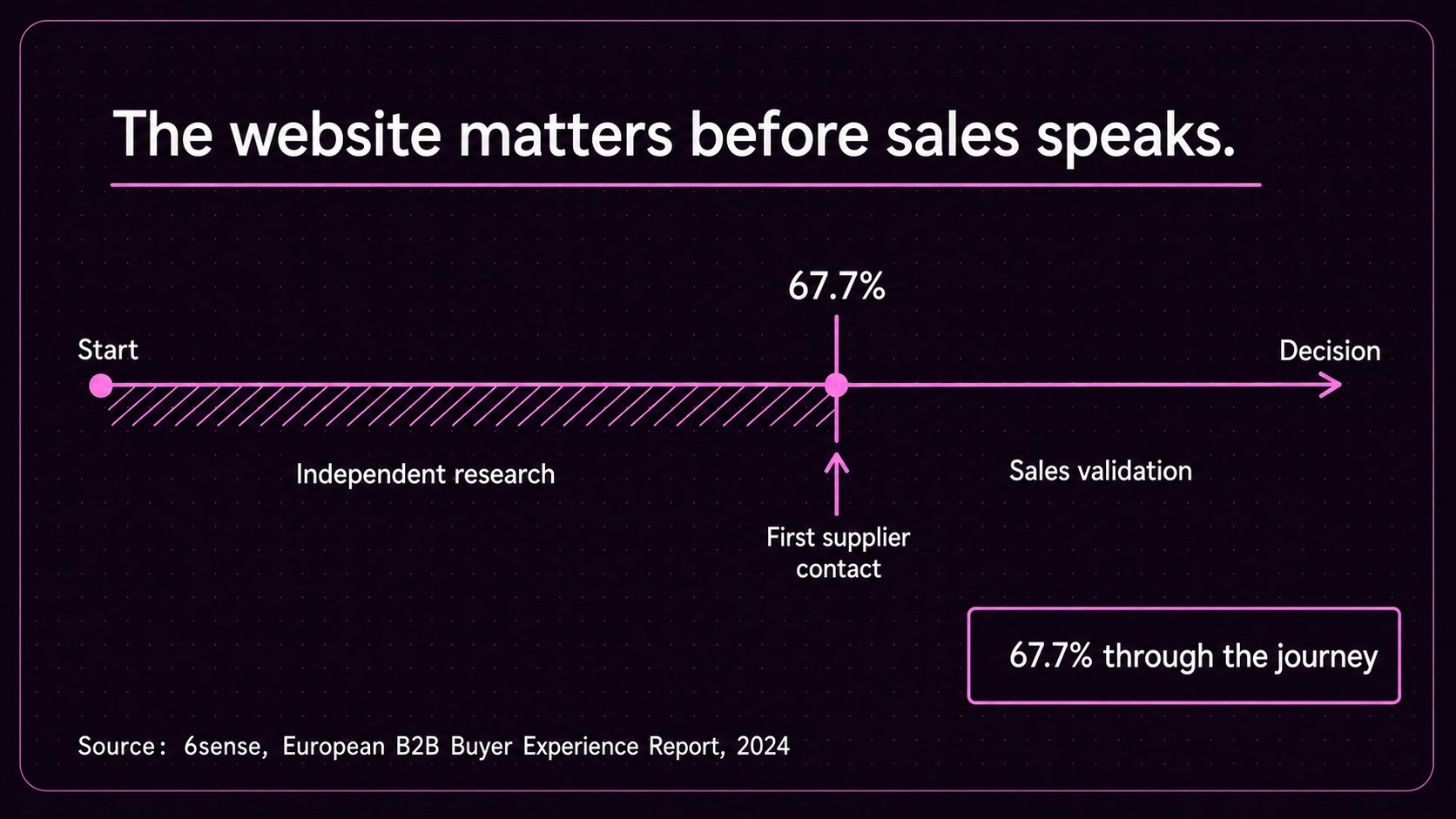
Signs that it may be time to improve the website
Consider a website project if several of these are true:- The company’s offer has changed, but the website has not.
- It is hard to explain what makes the company different.
- Important services, sectors, or expertise are difficult to find.
- Sales teams regularly send separate documents to explain basic information.
- The website does not reflect the quality of the company’s real work.
- Content is slow or difficult to update.
- The business is entering a new market or targeting new customers.
- Visitors cannot easily see relevant proof, examples, or credentials.
- Existing customers may not know the full range of services available.
A simple way to start the conversation internally
You do not need to begin with a request for a complete redesign. Start with a practical discussion:1
What should a new prospect understand in the first minute on our website?
2
Can they easily find proof that we are credible?
3
Does the website support the sectors and services we want to grow?
4
What questions do sales teams answer repeatedly that the website should answer?
5
What would happen if a new prospect compared us with competitors today?
Final thought
The question is not whether your company can still win business through relationships, referrals, trade shows, and sales expertise. The question is whether every potential customer can quickly understand why your company deserves to be considered. A good B2B website helps make that answer clear.Ready to act on this? What to know before starting a new website covers the five decisions worth resolving before the work begins.